 BDSM.tech the plain-English kink reference
 BDSM in Film: The Five Movies Everyone Cites, and What They Actually Show

Ask around for a film about BDSM and you get roughly the same five titles back, usually in the same order, usually from people who have seen two of them. For a large number of viewers this short list is the only sustained depiction of the subject they have ever encountered, which means a fair share of the assumptions newcomers turn up with can be traced to one of these pictures.
None of them was made as an explainer, and holding that against them would be unfair. The useful exercise is to know what is actually on screen in each, and then to notice which parts of it have quietly become the popular idea of what kink is.
Why it is always these five
Every one of them was reviewed seriously in the mainstream press, stayed in circulation long enough to be rented, broadcast and eventually streamed, and between them they cover most of the period in which this subject could be discussed in public at all. Films that depict the practice more recognisably do exist, but they were made for smaller audiences and nobody outside those audiences has heard of them. What survived is what got released widely and written about at length, which is a completely different filter from what gets it right.
Belle de Jour (1967)
Luis Buñuel’s film, adapted with Jean-Claude Carrière from a 1928 novel by Joseph Kessel, stars Catherine Deneuve as Séverine, a young bourgeois wife in Paris who begins spending her afternoons working in a discreet house. It won the Golden Lion at Venice and became Buñuel’s most commercially successful picture.
The device everybody remembers is that the film gives fantasy and event identical treatment. There is no dissolve, no music cue, no change of light to tell you which is which, and the ambiguity is never resolved. Very little is shown, and its reputation for explicitness surprises anyone who actually watches it.
What it contributed to the popular idea of kink is the framing: a submissive fantasy presented as a symptom, something surfacing out of a marriage that is not working. That framing outlived the film and is now the default in a great deal of mainstream writing.
The Night Porter (1974)
Liliana Cavani’s film puts Dirk Bogarde and Charlotte Rampling in Vienna in 1957. He is a former SS officer working nights at a hotel under a new identity. She survived the camp where he served, arrives as a guest, recognises him, and stays. What they resume began under total coercion.
This is the one that has never settled. Vincent Canby’s review in the New York Times was hostile, other serious critics defended it as a study of what coercion does to the person who survived it, and the argument has continued for half a century between people who have all watched it closely. Cavani has consistently rejected the reading that the film eroticises fascism.
Whatever position you take on the film, it has no bearing at all on anything two people negotiate. It depicts a relationship formed under absolute power with no possibility of refusal, which is the precise opposite of the subject it gets cited for. Its most durable effect has been visual: the uniform imagery escaped the film almost immediately into fashion and pornography, and a good deal of what people picture when they hear the word fetish came from that leak rather than from anything in the scene. A film column that lays out both sides of the dispute without pretending to settle it is worth reading before you form a view, because summaries of this one are almost always written by somebody with an axe.
Story of O (1975)

Just Jaeckin directed the adaptation, from a screenplay by Sébastien Japrisot, with Corinne Cléry as O and Udo Kier as her lover. The source is the 1954 novel published under the name Pauline Réage, whose author was confirmed in 1994 as Anne Desclos, who also published as Dominique Aury. That the book turned out to have been written by a woman, and written for a particular reader, is the most interesting fact about it, and a film has no way of carrying it.
The novel works through a narrating voice describing its own submission in an almost administrative register. The film keeps the events and loses the voice, so what remains is a sequence of very well appointed tableaux: the chateau, the training, the collar, the ring, the country house.
Those objects are the film’s real legacy. The collar in particular arrived in popular culture largely through here. So did the idea, which the story does present, that submission is a road with no exits, where each stage leads to a further one that is handed to you rather than chosen. Real dynamics do not run on that logic, and people who took it from this film often arrive expecting a fixed sequence.
Secretary (2002)
Steven Shainberg directed, Erin Cressida Wilson wrote the screenplay, and the source is a short story by Mary Gaitskill from her 1988 collection Bad Behavior. Maggie Gyllenhaal plays Lee, a young woman recently out of a psychiatric hospital who takes a job with a lawyer played by James Spader.
It is the most cited film on this list, and its achievement is structural. It borrowed the architecture of a romantic comedy and put a consensual dominant and submissive relationship inside it, treating the whole thing as a courtship between two shy, peculiar people rather than as a case study or a thriller. Nothing in English-language cinema had quite done that before.
The objection people keep returning to is also structural. Lee is introduced in distress and self-harming, and that distress is resolved through the relationship, which can be read as presenting power exchange as a treatment for a psychiatric condition. Admirers answer that it is a comedy about two awkward people, not a clinical claim. Both readings have been argued seriously since 2002 and the film has never settled into one reputation. It also, like every film here, skips the conversation: no limits, no stop signal, nothing negotiated out loud.
The Duke of Burgundy (2014)
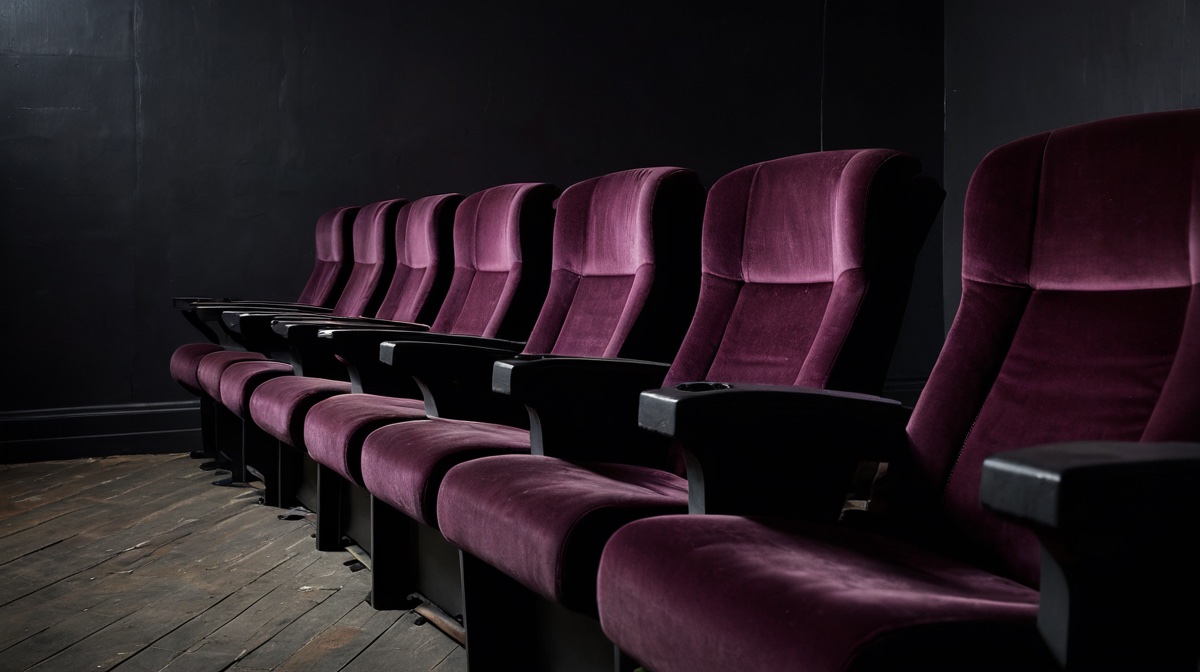
Peter Strickland’s film is set in an unnamed part of Europe where every character is a woman and the only visible occupation is the study of butterflies and moths. Sidse Babett Knudsen and Chiara D’Anna play a couple who run a repeated domestic scenario with fixed lines and fixed tasks.
Then the film shows you the machinery. The lines the dominant partner delivers were written by the submissive one. The timing is scheduled, the costume laid out in advance, and the partner who appears to be in charge is doing exhausting labour to a specification she did not set. The film follows what happens when she can no longer keep it up.
That is the only depiction on this list where the arrangement is treated as something authored, maintained and capable of wearing people out, which is much closer to how ongoing power exchange actually behaves than anything in the other four. If you want the inversion pulled apart properly, a long-form reading of who is actually writing the script does the job better than a paragraph can.
What people take from these films that is not true
The clearest inherited assumption is that the interest comes from damage. Four of these five attach it to something that went wrong, and none of them shows a person who simply wants this and always has, which is the ordinary case.
The second is that nobody talks. Negotiation is undramatic, so films cut it, and what viewers absorb instead is a dominant who arrives fully formed, reads minds and never asks. That single omission is responsible for more disappointing first attempts than any other, and it is worth setting against how fantasy and reality diverge once a scene is actually happening in a room.
The third is that the aesthetic is the practice. Chateaux, uniforms and soft lighting are production design, and the gap between them and a Tuesday evening at home surprises people. The fourth is escalation, the idea that starting means continuing until you arrive somewhere you did not choose. Story of O is built on that shape, and most long dynamics settle rather than escalate.
Which of them is about consent
Only one, really. The Duke of Burgundy is about an agreement between two people, its authorship, its upkeep and its cost. Secretary is about two people arriving at something together, though the film is not interested in the conversation that would have to happen. The remaining three are about coercion, ambiguity, or a fantasy filmed with no frame around it at all, and reading any of them as a description of negotiated practice is a category error.
That is not a reason to skip them. It is a reason to watch them as films, which is what they are, and to get your understanding of how any of this actually works from somewhere that deals with consent models directly. The same caution applies to the other big mainstream reference point, and the Fifty Shades comparison covers that one separately.
FAQ
Which film gives the most accurate picture of BDSM?
The Duke of Burgundy, by a wide margin, and not because it is a manual. Peter Strickland's 2014 film shows a couple running a rehearsed dominant and submissive routine that the submissive partner has written, scheduled and keeps revising, and it follows what happens when the partner playing dominant gets tired of the work. The idea that the arrangement is authored, discussed and effortful is the part almost no other film bothers with.
Is Secretary a realistic film about BDSM?
It is realistic about tone and unrealistic about process. Steven Shainberg's 2002 film treats a dominant and submissive relationship as a courtship between two awkward people rather than as a pathology or a thriller device, which was genuinely unusual for its time. What it skips is everything that makes the real version work: no negotiation, no limits conversation, no stop signal. It also resolves its lead's distress through the relationship, which critics have argued about since release.
Why do the same few BDSM films keep getting mentioned?
Because they are the ones that got taken seriously as films. Each was reviewed in the mainstream press, each has stayed in circulation for decades, and between them they cover the eras when this material could be discussed publicly at all. It is a list produced by distribution and criticism rather than by accuracy, which is why it is a poor guide to what people actually do.