 BDSM.tech the plain-English kink reference
 Sensory Deprivation: Blindfolds, Hoods and Losing Your Bearings
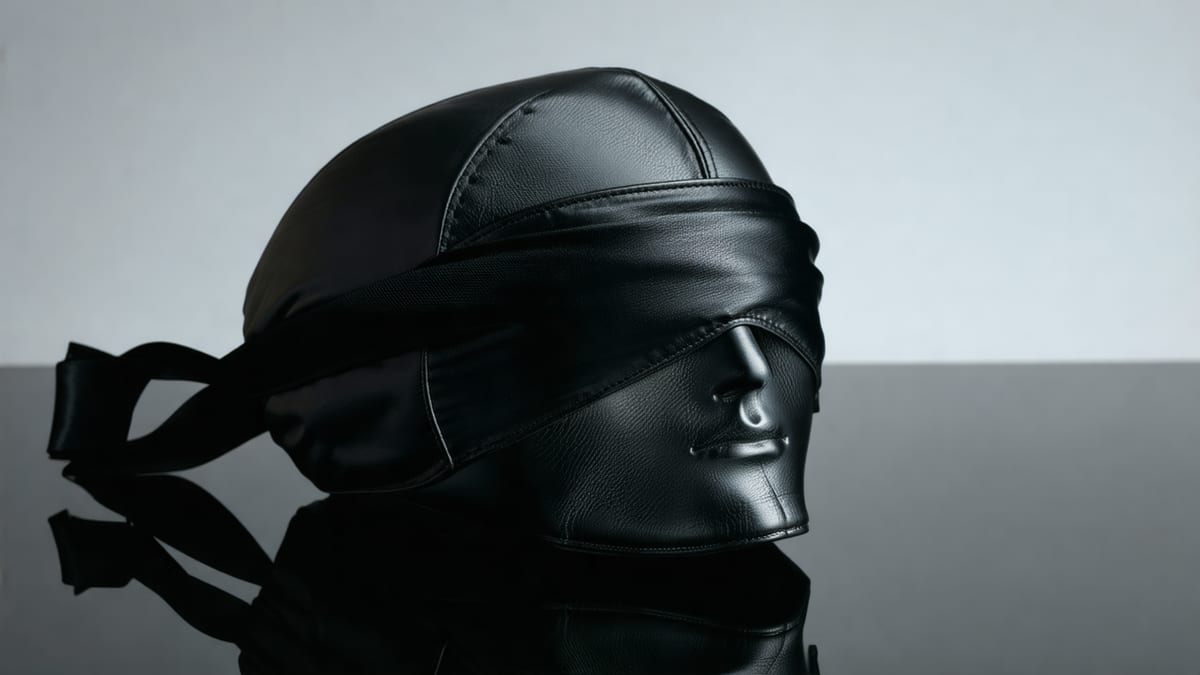
Take a sense away and the rest of them get louder. That’s the trick behind sensory deprivation, and it explains why so little kit can carry so much weight. A blindfold costs a fiver. The whole scene shifts.
Start with sight
A blindfold is the whole category in miniature. It kills anticipation, turns familiar touch into something unreadable, and pulls attention inward. People are genuinely surprised how much a five-pound scrap of fabric shifts a scene. Start here. Pair it with sensation play.
Then sound
Hearing goes next, with earplugs or noise-cancelling headphones. Stack sound on top of sight and the disorientation turns real: the bottom loses track of where you are and what’s coming. That is the point of it. It also ramps the psychological load up fast, so reach for it deliberately, never as a casual add-on.
Touch and speech
Mitts take the hands out of play, so they can’t explore or gesture. Gags take away speech. Both are legitimate, and both close a channel you had been using to communicate. Plan around that in advance rather than bumping into it halfway through a scene.
The airway rule

This one is absolute, which is why hoods earn their own paragraph. Nothing over the head may restrict breathing. Ever. Use gear built for the job, with the nose and mouth left clearly open. Check breathing constantly. Never leave someone hooded on their own, not for a second, and be able to get the hood off in one movement. A hood that fights airflow isn’t a stricter version of the kink. It’s a suffocation risk, and it’s the exact failure mode people talk themselves past.
Communicating without words or sight
Agree a non-verbal signal before anything covers the eyes or ears: a set number of taps, or an object held in the hand that gets dropped if something goes wrong. Test it. Then build in regular check-ins that only need a squeeze back, because someone deep in deprivation often won’t volunteer that they’re in trouble.
Disorientation and panic

Both land faster than people expect. They can also arrive in someone who has loved this a dozen times before. Keep a hand resting somewhere on them, so they always know you’re close. Stay in the room. If they ask for the blindfold off, treat that as immediate, not as something to negotiate.
Why it works so well
It’s the safer road to what a lot of people are actually chasing when they reach for riskier play: helplessness, surrender, that feeling of losing the thread of what’s happening. Deprivation hands you that without the airway danger that makes some other practices indefensible. No hood required to get there.
Coming back
Give the senses back one at a time, not all at once. Let it take a minute. Deep deprivation can leave a person floating for a while, slow to find the ground and slow to feel normal again. That is what makes aftercare part of the scene here, not a nice-to-have bolted on at the end.
FAQ
What is sensory deprivation in BDSM?
Deliberately removing one or more senses, usually sight, sometimes hearing, touch or the ability to speak, so that everything remaining is amplified. A blindfold alone transforms a scene; layering sight and sound produces profound disorientation and is one of the strongest psychological tools in kink for almost no equipment.
Are hoods safe?
Only with the airway rule observed absolutely: nothing may restrict breathing, at all, ever. Use hoods designed for the purpose with open nose and mouth, check breathing constantly, never leave someone hooded alone even briefly, and be able to remove it in one movement. A hood that impedes airflow is not a kink item, it's a suffocation risk.