 BDSM.tech the plain-English kink reference
 Psychological
What is Latex & Rubber?
Also known as: rubber fetish, latex kink, rubberism
In depth
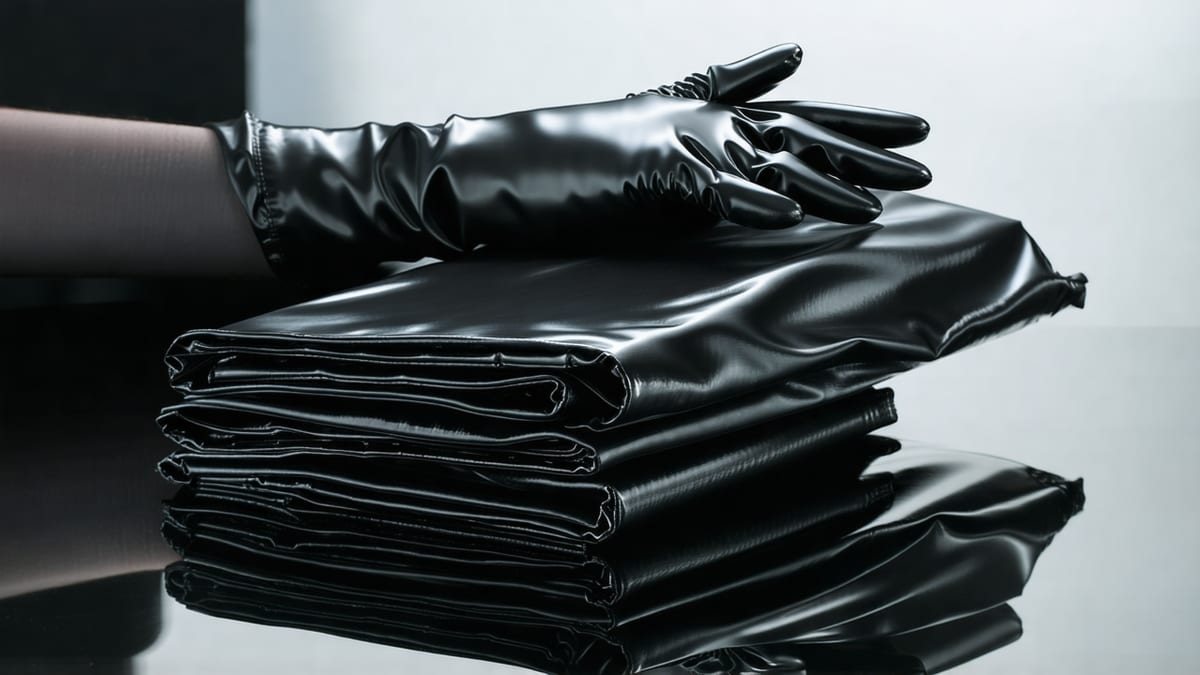
Latex and rubber fetishism puts desire on the material itself: the tight, glossy second skin, the way it reshapes the body's silhouette, the smell, the ritual of getting into it. It runs from fashion appreciation through sensory enjoyment to full immersion, and it overlaps with bondage, transformation and D/s play.
How it works
In practice it means wearing or admiring latex garments: dressing with talc or silicone lube to slide in, buffing the surface to a shine, enjoying the encasement. It spans a single glove or dress up to full-body suits and hoods, sometimes paired with restraint.

In practice
Latex play often starts with the ritual of dressing: dusting the body or garment with talc, or sliding in with silicone lube, then smoothing and shining the surface to a mirror gloss. Once encased, the appeal is sensory and total, the tight hug of the material and the heat and the sound, the transformed silhouette, and for some the anonymity of a hood. It ranges from wearing a single striking piece to full-body suits, and often pairs with other kinks: restraint (latex plus bondage), sensory deprivation (hoods), or D/s (a doll or uniform dynamic). Enthusiasts care for their gear like a hobby, cleaning and drying it, storing it flat, keeping it away from oils and metals that stain. The whole experience, from dressing to shining to wearing, is part of the pleasure.
The appeal
Latex hits several senses at once, the second-skin tightness and the smell and the glossy transformed look, and the effortful ritual of getting into it builds anticipation. Encasement can feel powerful, protective, or deliciously objectifying, depending on the wearer.
Common variations
Fashion appreciation versus full immersion, catsuits and dresses and gloves and stockings and hoods, heavy-rubber gear, doll and uniform transformation play, combining latex with bondage or sensory deprivation or D/s. Colour, thickness and coverage all change the experience.
For beginners
Start with one accessible piece, gloves or stockings or a simple dress, and learn to dress with talc or silicone lube (never oil-based, which degrades latex). Check for latex allergy first. Mind heat and hydration even in partial coverage, and care for the garment properly so it lasts. Build up to fuller coverage as you learn how your body handles it.
For experienced players
Full suits, heavy rubber, inflatable and multi-layer gear, hoods, and transformation or doll play come with deeper practice, often combined with restraint and sensory deprivation. Enthusiasts curate collections and dressing rituals. Mind the real risks of full encasement, the overheating and dehydration and airway safety in any hood, and treat gear maintenance as part of the craft. The immersion is the reward, so build it methodically.

Safety
Full coverage brings a risk of overheating and dehydration, since latex doesn't breathe, so make sure any hood allows airflow and check for latex allergies. Look after the material too (talc, and no oils that degrade it) so it stays safe and intact.
Latex & Rubber FAQ
What's the difference between a latex and a rubber fetish?
They are used almost interchangeably. Latex usually refers to the thinner, glossy fashion material; rubber can imply heavier gear. Many enthusiasts enjoy both.
Why is latex a fetish?
It combines several triggers, a tight second-skin sensation, a glossy transformed look, a distinctive smell, and the ritual of dressing, into one powerful sensory and visual package.